

Back to School; Back to Sports


For many students, going back to school might mean a return to sport—either a new one or one that is part of their regular school season but was perhaps less frequent over the summer.
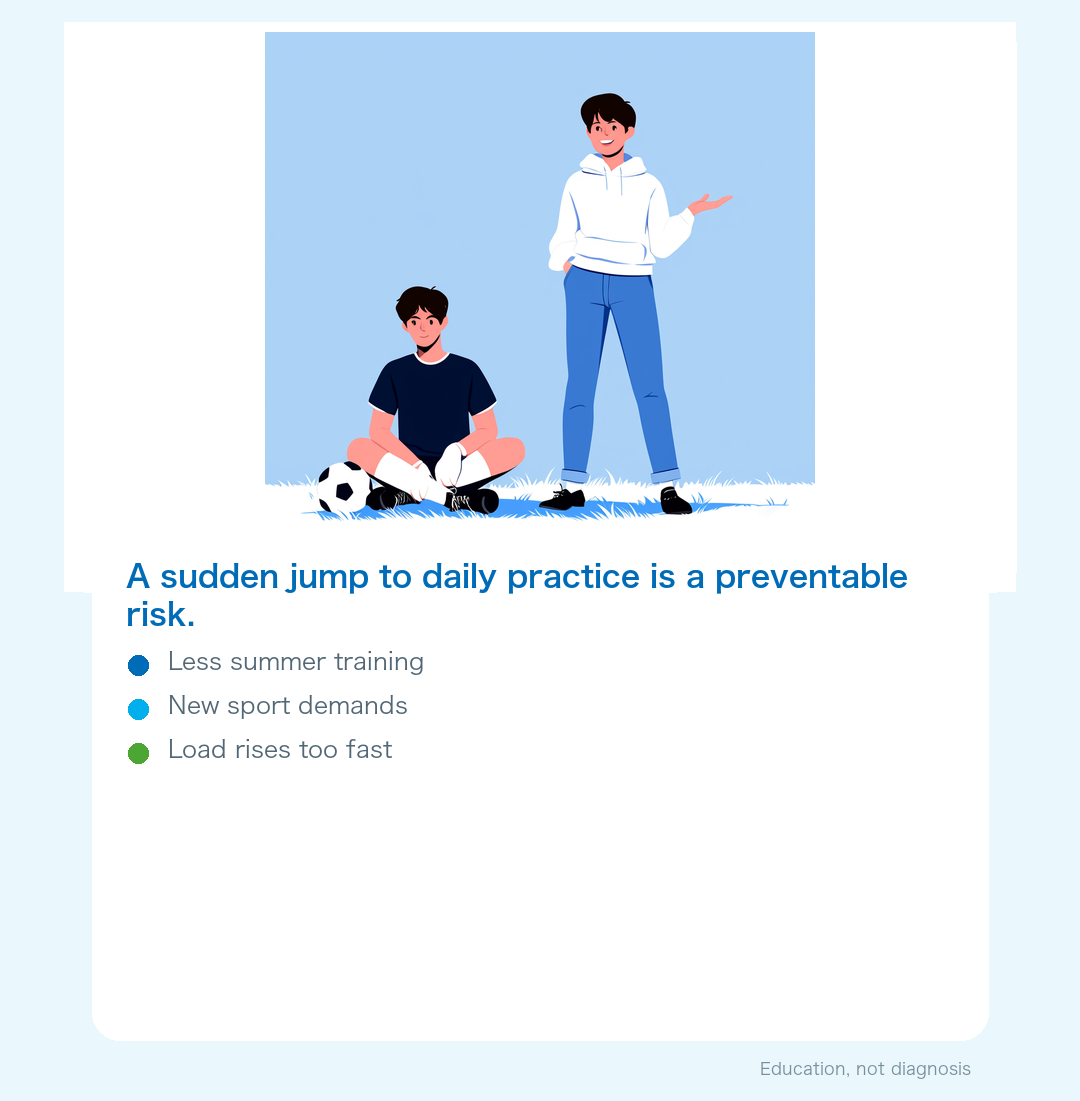
If they haven’t been training over the break, or if it’s a completely new sport, the jump into daily practices and competitions can be one of the biggest injury-risk points of the year. Fortunately, it’s also one of the most preventable.
Why the Start of a Season Can Be a Vulnerable Time
Jumping straight into the season with little or no training and moving immediately into daily practices is a clear risk factor for injury. Most athletes begin conditioning 4–6 weeks before a sports season officially starts, which allows the body time to build strength and endurance for the demands of a full practice schedule. Skipping a conditioning period is one of the most common—and avoidable—ways athletes can get hurt early in a season.
Understand the Risks
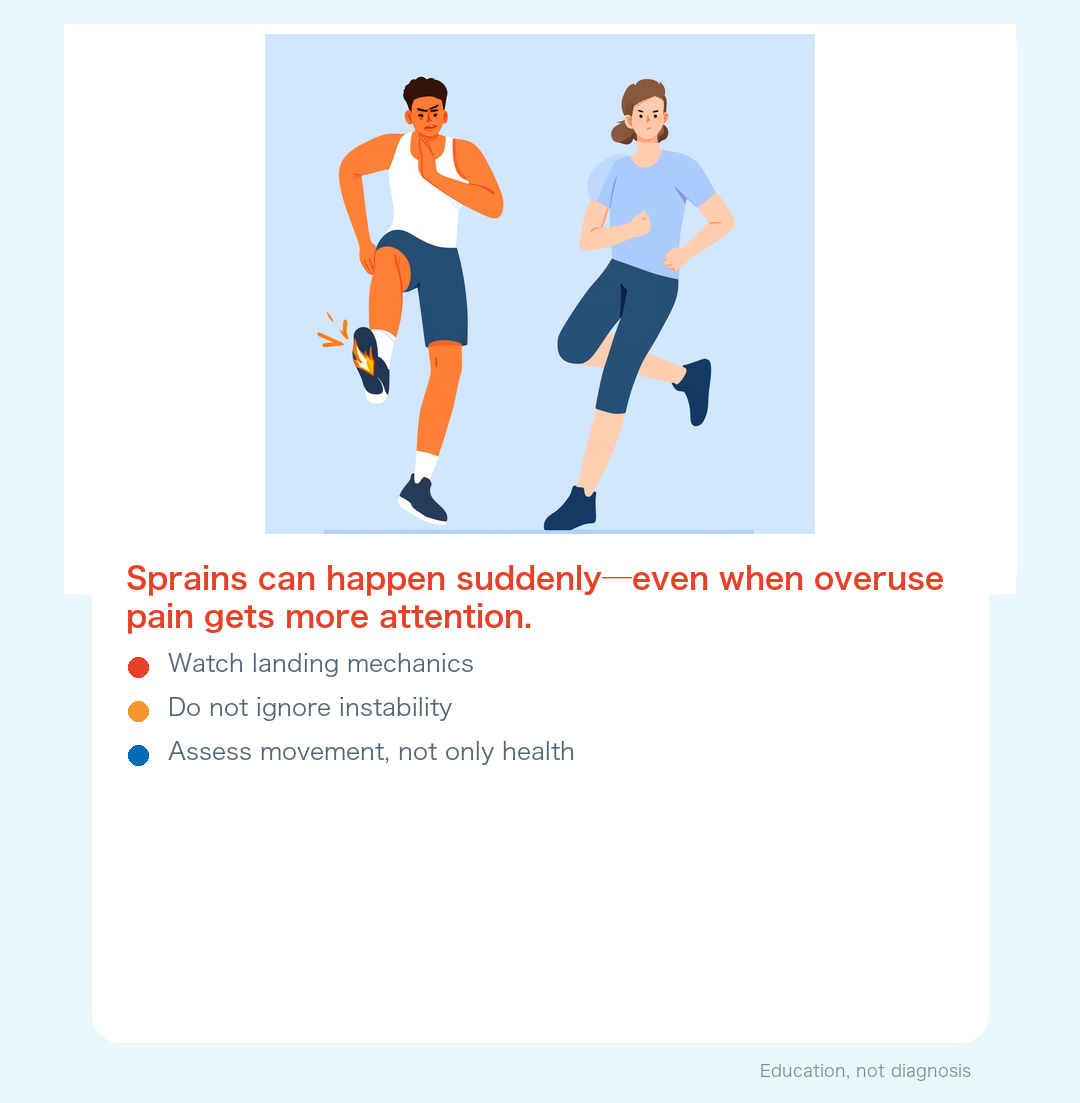
While overuse injuries, such as tendinitis or muscle strains, are common in student athletes, acute injuries, such as ligament sprains, are 9 times more likely. A standard medical assessment is important for a baseline health check, but it doesn’t typically identify movement-based risk factors.
Physical Therapy Can Make a Huge Difference Before Injuries Occur
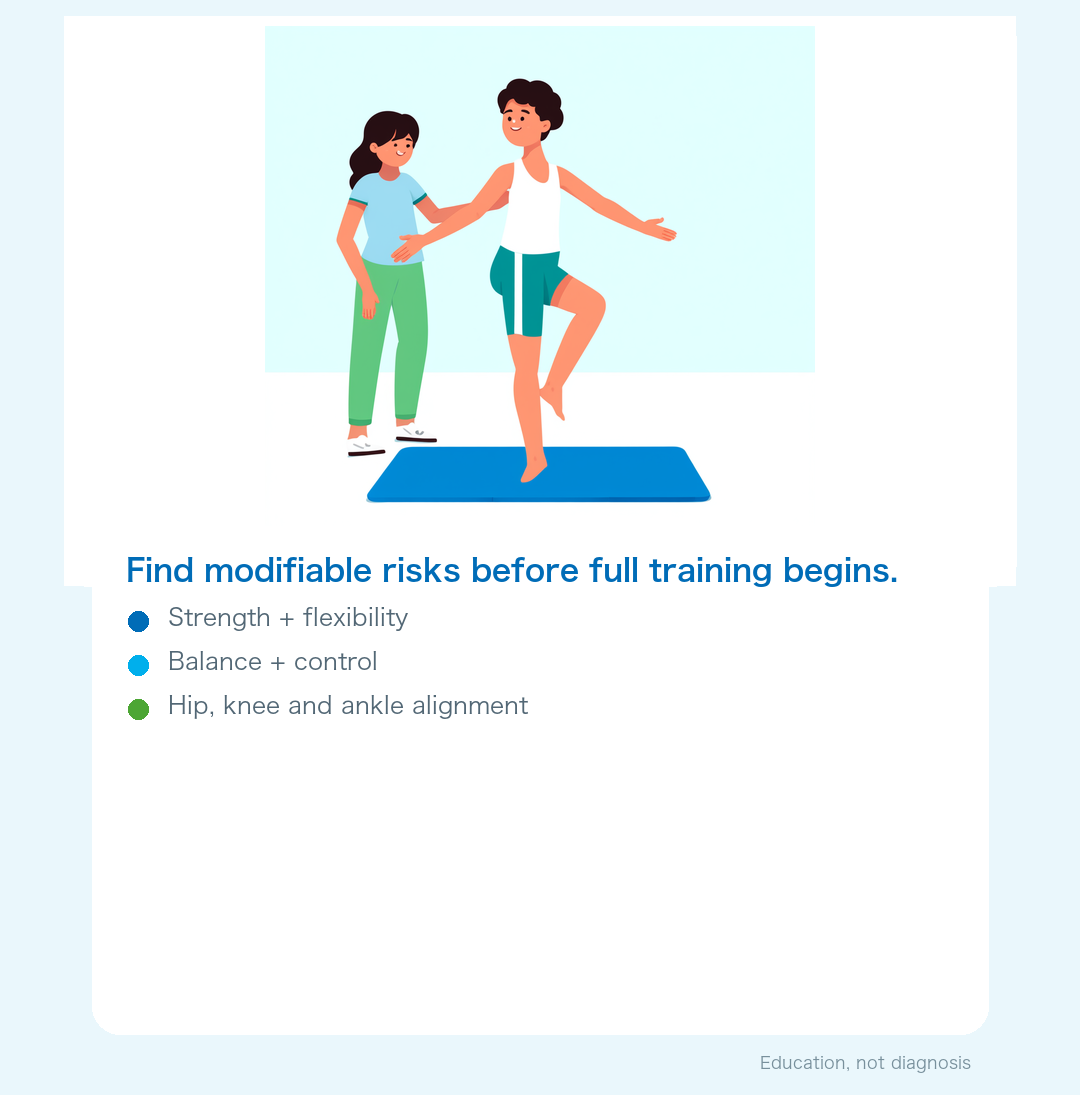
Physical therapists are trained to identify movement-based risk factors, such as limited hip mobility, muscle imbalances between the legs, or poor landing mechanics. A preseason movement screen, which looks at strength, flexibility, balance, and movement patterns, is an excellent idea for a student athlete. After the screen, the therapist can work with the athlete to build a conditioning plan that supports weak areas in the body and helps prevent injuries related to that student’s specific sport.
Seasonal Support Is a Great Idea
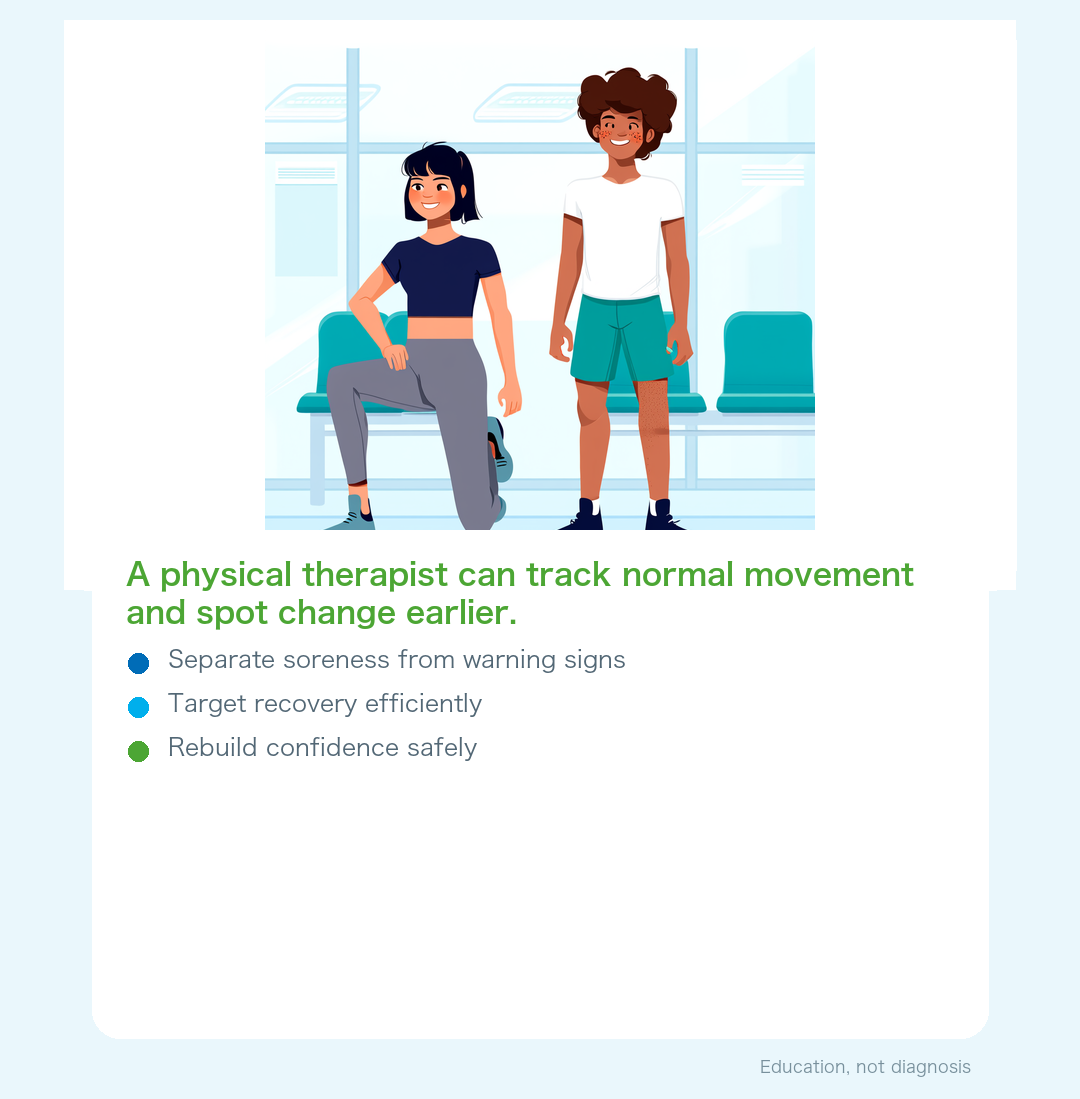
Think of seeing a physical therapist like visiting the dentist or doctor. Scheduling regular visits can help reduce injury risk and ensure everything stays on track throughout the season. A physical therapist can also help coaches, parents, and athletes recognize the difference between normal training soreness and the early signs of an overuse injury.
If an Injury Does Occur
Having developed a relationship with a physical therapist before an injury occurs may even help speed recovery. The physical therapist knows how the athlete’s body moves when it is performing well, which can help target problem areas more quickly. Plus, building a relationship with a professional early on can help the patient feel comfortable and confident with treatment.
Move Well, Move Often
If sport plays a big role in your child’s life, it’s worth scheduling an evaluation early with a physical therapist. Identifying limiting factors in movement and developing a plan to support growth and development can play a major role in helping young athletes continue to enjoy and progress in the sport they love. Book a movement screen or consultation with a physical therapist and set your student athlete on a powerful path to pursue sport at their best.