
Q&A: Eui Woong Lee (Chiropractor)


About Dr. Lee
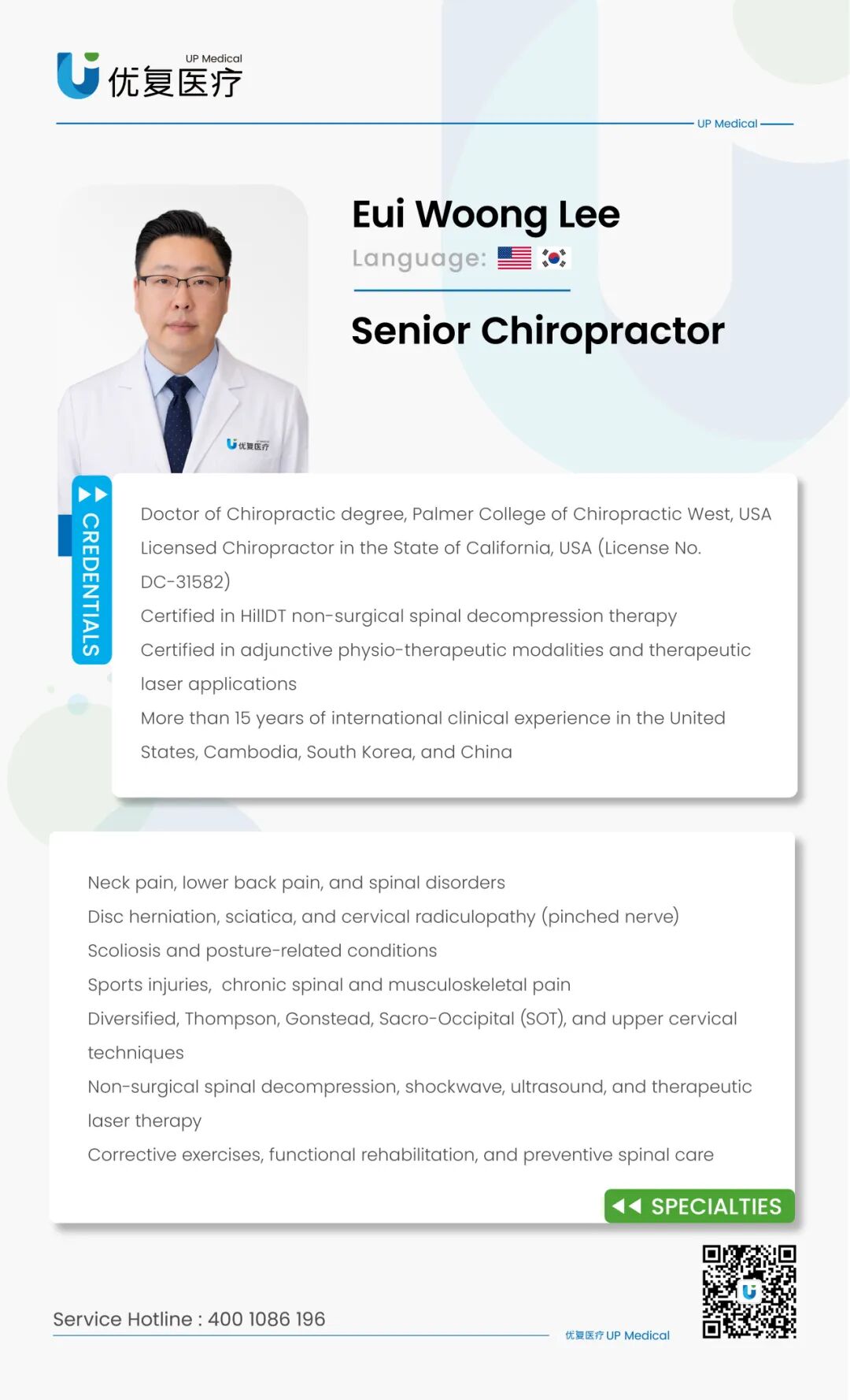
Dr. Eui Woong Lee is originally from South Korea, but lived and worked in the US for nearly 20 years, as well as, South Korea, Cambodia, Chengdu and now, Shanghai! He earned his chiropractor license in California, having studied at Palmer College of Chiropractic West. Now, joining the Shanghai UP team, he is excited to share his experience with our community. Read on to learn more about Dr. Lee!
Q1: How did you first decide to become a chiropractor?
I come from a family of doctors. My grandfather was a physician, and my father was a well-known plastic surgeon in South Korea who studied at the University of Tokyo. As the eldest son, I was encouraged to continue that family tradition. Initially, I resisted the idea, but as I grew older, I realized how deeply I wanted to help people and began seriously considering a career in healthcare.
The turning point was watching my mother struggle after suffering multiple strokes. Her mobility became severely limited, and even simple activities such as walking or getting in and out of a car were difficult. Although she received care from highly respected doctors, her recovery was slow. That experience made me appreciate the importance of prevention, physical activity, mobility, and long-term functional rehabilitation, not just treating pain after it occurs.
Once I moved to the United States, I became fascinated by the conservative, hands-on approach with chiropractic care and its focus on how the spine, joints, nervous system, and movement work together. I wanted to help people maintain mobility, address mechanical restrictions, function more effectively, and take a more active role in their health.
“ Although many people expected me to become a medical doctor like my father, I deliberately chose to become a chiropractor. I truly believe that properly trained chiropractors have an important place in healthcare. This profession gave me the opportunity to continue my family’s tradition of caring for others while following my own path and philosophy of conservative, functional, and preventive care.

Q2: That’s such a beautiful way to honor your family’s career history, while also choosing a profession that resonates with you. Could you share more about some of your specialties?
15+ YEARS OF CLINICAL EXPERIENCE
I have more than 15 years of clinical experience, with a primary focus on neck pain, thoracic pain, lower back pain, disc-related conditions, sciatica, cervical radiculopathy, postural dysfunction, scoliosis, and musculoskeletal injuries.
My approach varies of course based on the patient and their needs, but it may include chiropractic manipulation, spinal decompression, soft-tissue techniques, physiotherapy modalities, corrective exercises, and rehabilitation. I first assess the patient carefully and then develop an individualized treatment plan based on the condition, examination findings, lifestyle, and functional goals.
Q3: How do you see the relationship between chiropractic care and physical therapy?
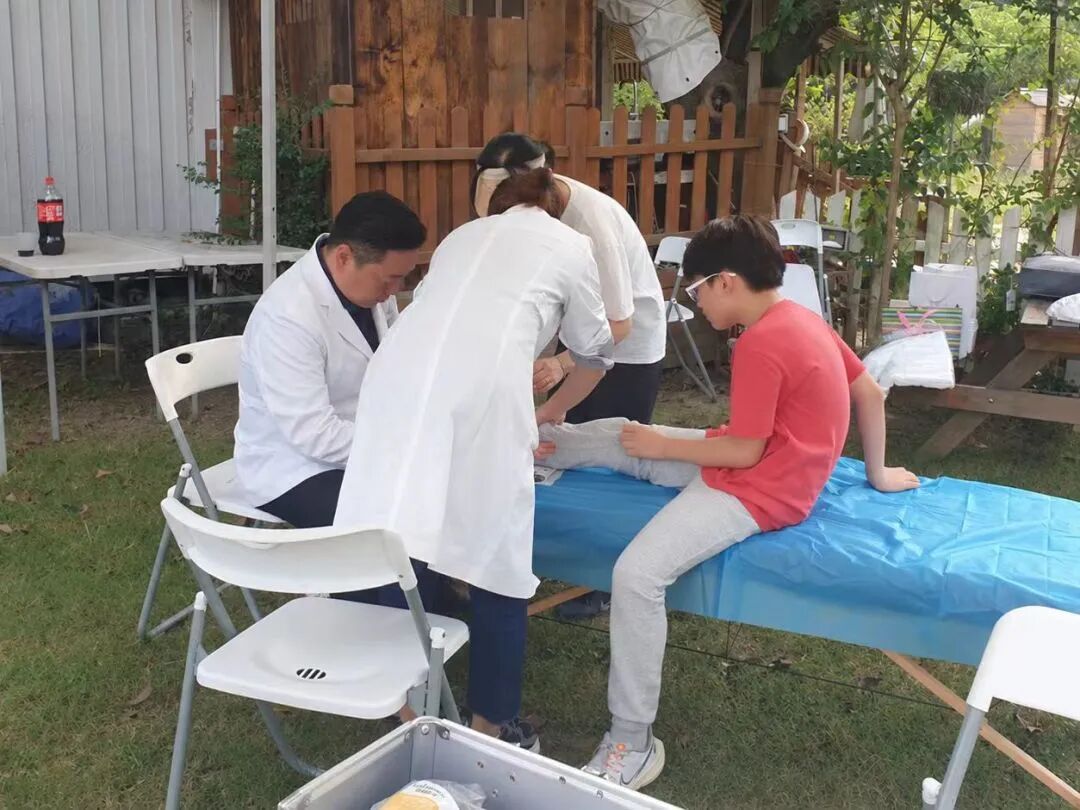
I see chiropractic care and physical therapy as highly complementary. Chiropractic care can help improve joint mobility, spinal function, and movement restrictions, while physical therapy helps patients develop strength, stability, flexibility, and better movement patterns.
When these approaches are properly coordinated, patients can receive both hands-on care and active rehabilitation. The goal is not only to reduce symptoms, but also to restore function and lower the likelihood of recurrence.

Q4: We’ve recently written some articles about posture Protecting Your Posture as a Student. Would you be able to share any tips for a patient with postural concerns?
There is no single “perfect” posture that must be maintained all day. The body generally responds better to regular movement and changes in position than to remaining in one position for many hours.
I encourage patients to:
|
01 Change position and move regularly during the day. |
|
02 Avoid prolonged sitting whenever possible. |
|
03 Keep computer and mobile-device screens at an appropriate height. |
|
04 Perform exercises that strengthen the upper back, core, and hip muscles. |
|
05 Maintain adequate mobility in the neck, thoracic spine, shoulders, and hips. |
|
06 Pay attention to symptoms such as persistent pain, numbness, weakness, or radiating discomfort. |
Most importantly, postural care should be individualized. Forward-head posture, rounded or uneven shoulders, and pelvic imbalance may have different causes, so proper assessment is important before recommending treatment or corrective exercises.

Q5: Those are some great tips! What do you see as one of the biggest challenges with patients?
One of the biggest challenges is helping patients understand that pain is not always the complete picture. A patient may begin to feel better before normal mobility, strength, and movement control have been fully restored.
Another challenge is consistency. Lasting improvement often requires the patient to participate actively through home exercises, postural awareness, activity modification, and healthier daily habits. My role is to explain the condition clearly and help each patient understand what they can do to support their own recovery.
Q6: That’s a great point you bring up! Even if you feel pain in one place that might not be the full picture of health. Do you have any personal experiences working with patients that you could share that highlight this type of experience?
Several experiences throughout my career have reinforced the importance of examining the whole patient rather than simply treating the area where pain is felt.
|
01 |
In one case, a patient presented with symptoms that I recognized as red flags for a serious abdominal condition rather than a musculoskeletal problem. I immediately referred him to the emergency department, where he was diagnosed with a perforated gallbladder and underwent emergency surgery. |
|
02 |
On another occasion, a patient reported what initially seemed like relatively mild chest discomfort. However, my assessment raised concern about a potentially serious cardiac event. He was immediately taken to the hospital for urgent medical care. |
|
03 |
I also remember an older woman who walked with such severe forward-flexed posture that she was almost constantly looking toward the ground and could not comfortably stand upright or look toward the sky. Through careful, conservative chiropractic care (and no surgery!) – she experienced meaningful improvements in her mobility and posture. Eventually, she was able to stand more upright, walk with greater confidence, and look upward again. Seeing how much this changed her independence and quality of life was deeply rewarding. |
These experiences remind me that responsible chiropractic care is not simply about performing manipulation. It also requires careful examination, recognition of red flags, appropriate referral, and knowing when chiropractic treatment is, and isn’t, appropriate.
Q7: Thanks so much for sharing. Before we wrap up, is there anything you would like to add about being a chiropractor and your approach to recovery?
Chiropractic care is sometimes misunderstood as simply twisting the body until a joint makes a sound. That is not how I practice.
The way I work is through a conservative, hands-on approach intended to improve restricted joint motion, reduce mechanical dysfunction, and help the patient move and function more effectively. Manipulation should be precise, controlled, and applied only when the examination indicates that it is appropriate. The sound that may accompany treatment is not the objective, nor does it mean that a bone has been forced “back into place.”
My responsibility is therefore much broader than performing manipulation. I must determine whether the patient’s symptoms are musculoskeletal, identify any warning signs of a more serious condition, and decide whether chiropractic care is appropriate and safe. When it is appropriate, I use targeted chiropractic manipulation together with soft-tissue care, rehabilitation, exercise, and patient education. When it is not appropriate, I refer the patient to the right medical professional.
SAFETY FIRST
Performing manipulation unnecessarily, excessively, or in the wrong area may expose a patient to avoidable risk. This is why chiropractors receive extensive professional education in anatomy, neurology, biomechanics, diagnosis, imaging, clinical examination, and the identification of conditions that require medical referral.
For me, good chiropractic care is not about chasing a joint sound. It is about applying the right care to the right area, for the right reason, while always protecting the patient’s safety and helping the body regain better movement and function.
Move well, move often!