

Protecting Your Posture as a Student


It’s easy to develop aches and pains as a student. Screen use is a huge contributing factor to a stiff neck, tight shoulders or even headaches – especially when paired with poor posture while using a computer or phone. It’s important to understand what is causing certain types of a pain, and even more important, what can be done to help minimize that pain.
1. Device type matters.
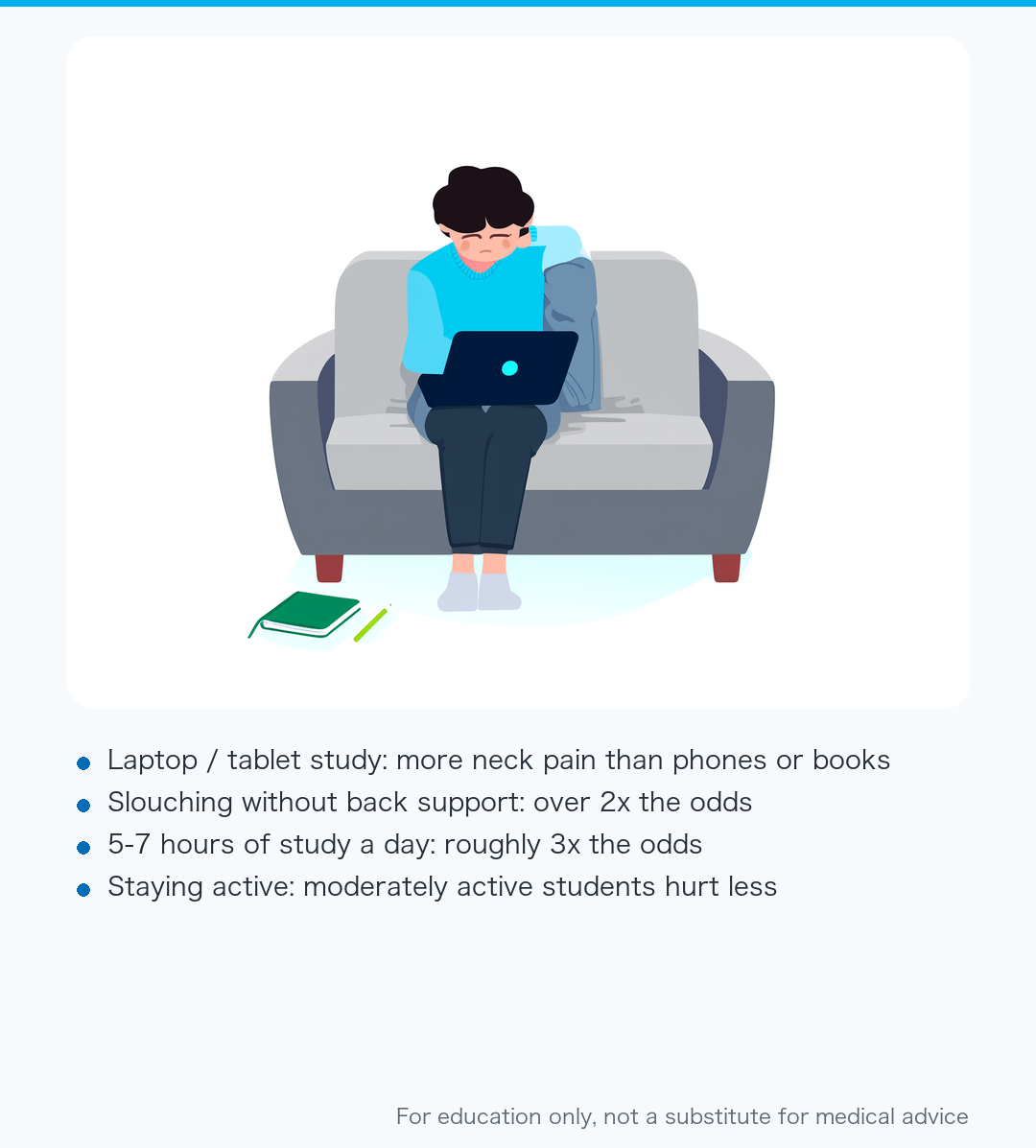
Studies have shown that students who study primarily on laptops or tablets develop more neck pain than those who use phones or books. That said, it’s less about screen use, and more about posture – utilizing a laptop or tablet tends to pull you in to a position that brings your head down and shoulders rounded forward.
2. Slouching doesn’t help!
Students who study with a slouched position and without back support double the odds of neck pain, compared with those who sit upright or have slouched, without back support, had more than double the odds of neck pain compared to utilize a support system.
3. Marathon study sessions make it worse.
Students studying 5 to 7 hours a day had roughly 3 times higher odds of neck pain than those studying less, reminding all of us that breaks are just good for focus, but they’re good for the body too.
4. Staying active helps a lot!
Students who were at least moderately physically active have lower odds of developing neck pain in the first place, which builds a solid case for moving well and often – along with learning.
5 Tips for Better Study Posture
1) Build in breaks.
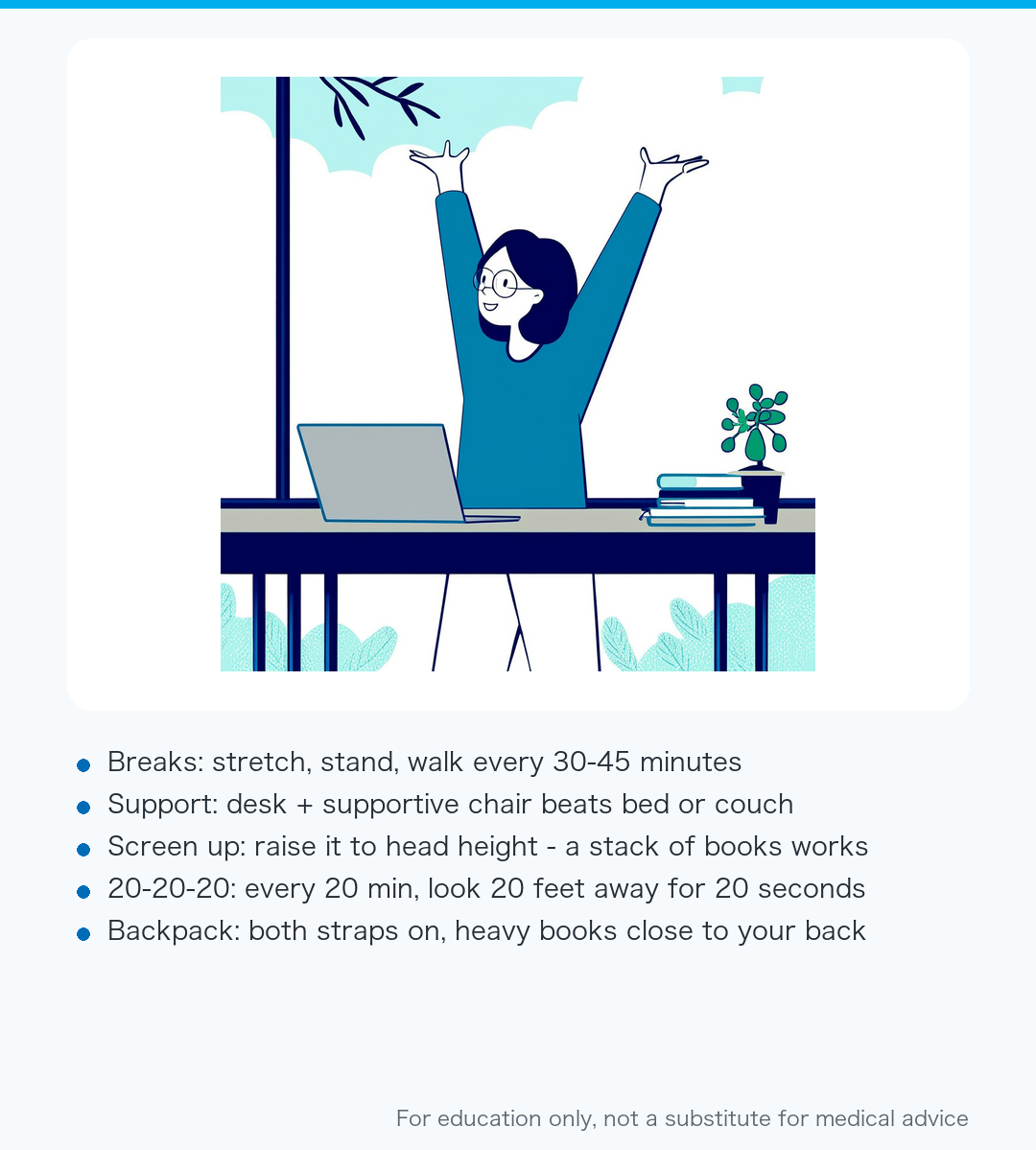
Every 30-45 minutes build in breaks to stretch, stand and walk around. This is especially important during long study sessions.
2) Find a supportive platform for studying.
While the bed and couch may be comfy, sitting at a desk or table with a supportive chair helps to keep the spine in a better position versus curling over a laptop from a less structured surface.
3) Keep your screen high vs. your head low.
Bring your screen up to head height with an elevated keyboard or even a stack of books. This helps your wrists and shoulders stay relaxed.
4) Try the 20-20-20 rule.
Every 20 minutes, look at something 20 feet away for 20 seconds to rest your eyes. This gives your neck and shoulders a natural reset.
5) Avoid overloading your backpack.
If using a backpack, make sure to use both straps, keep heavier books close to your back, and avoid slinging a loaded bag over one shoulder. Over time, this habit pulls posture off-balance… just as bad a screen posture does!
Physical Therapy can also help
Posture-related pain in students is one of the most common, and most treatable! A physical therapist can look at the body in it’s natural state and build a plan to help support healthy stature and reduce pain. If scoliosis is a concern, the physical therapist can also address this.
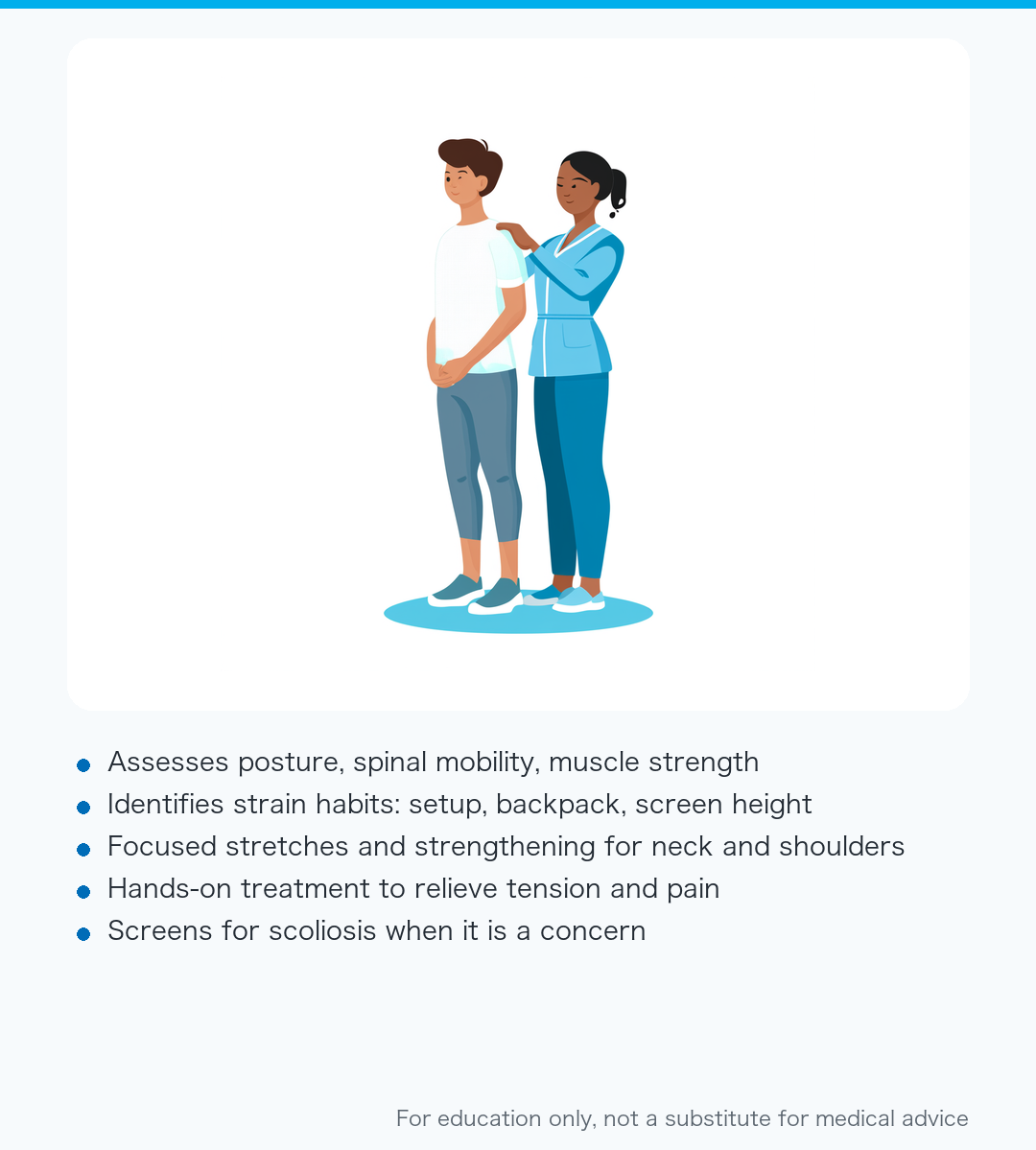
When a student comes in for neck, shoulder, or back discomfort, our UP physical therapists will assess posture, spinal mobility, and muscle strength to determine what’s actually contributing to the pain. They can also help to identify specific habits, like studying a student’s study setup, backpack use, screen height, or additional factors that could add strain.
They will also work with the student to teach them focused stretches and strengthening exercises for the neck, upper back and shoulders. And of course, can give hands on treatment to relieve existing tension and pain. Helping a student relieve pain and put best posture practices into place allows them to not only feel better, but will offer them an opportunity to stand up straighter and have more confidence.
Catching poor patterns early makes a huge difference. The longer a child or young adult trains poor posture, the easier it is to carry those bad habits into adulthood. A few smart adjustments can save them from chronic pain habits later. Book an appointment with UP to set your student on a lifelong pass for success.
本篇文章来源于微信公众号: 上海优复康复医学门诊部