

Back to School Shouldn’t Mean Body Pain


Heading back to school means a lot of changes and challenges. A new backpack, new routines and possibly a new set of physical demands. And that doesn’t just apply to students – teachers have a lot of changes too, especially when it comes to time on feet after possibly enjoying a more leisurely summer. If you or a family member is returning back to school, here’s a list of possible aches and pains to keep in mind – and not allow them to hold you back!
1. Is that backpack too heavy?
A backpack that’s too heavy is one of the most common, and most fixable, causes of back and shoulder strain in school-age kids. Unless it’s a bag on wheels, a child’s backpack should be no more than 10-15% of their body weight. It’s also worth considering how long the commute will be if the child is not able to rest the bag off their shoulders for an extended period of time.
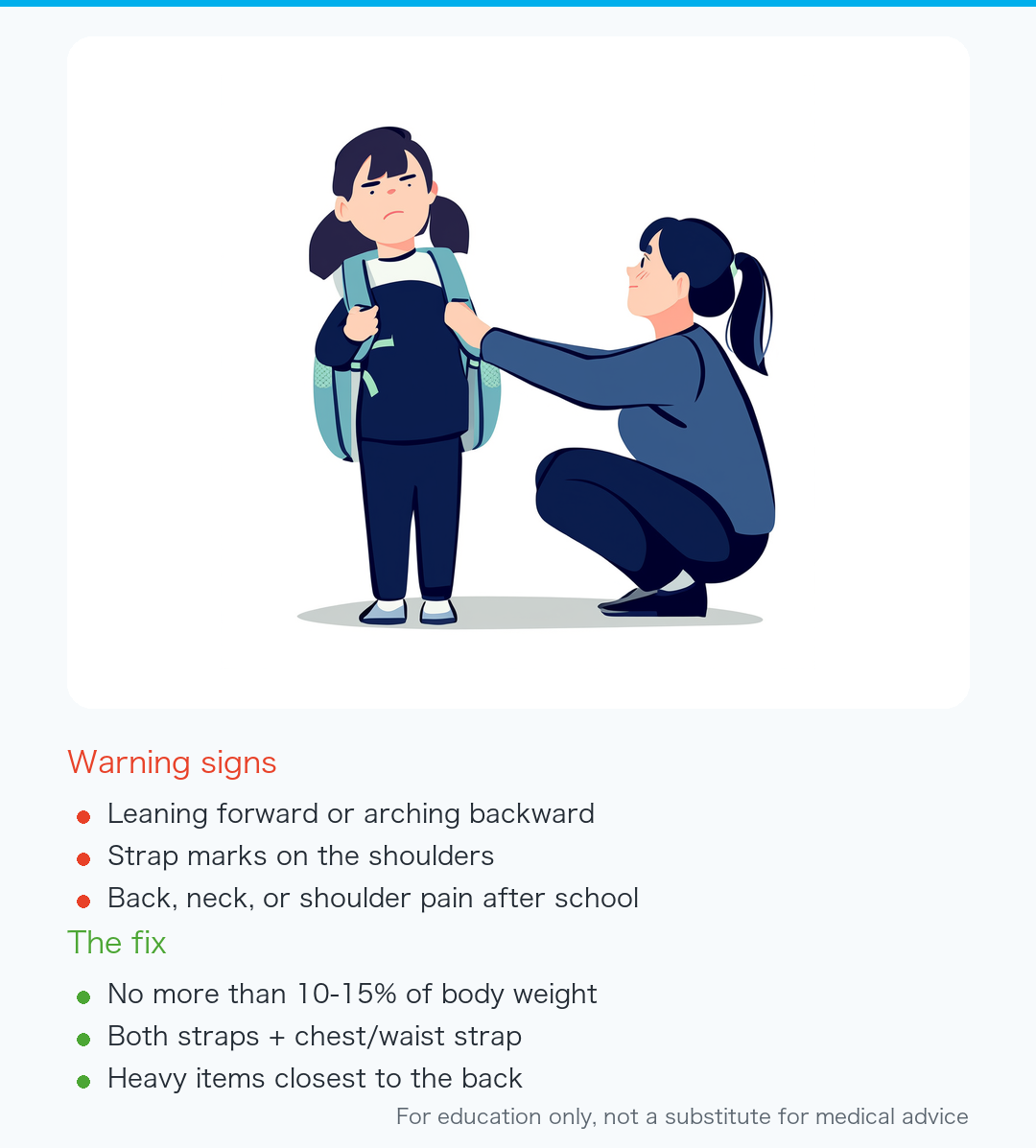
Signs a backpack is too heavy:
• A child leaning forward or arching backward to compensate for the weight.
• They struggle to put on or take off the pack without help.
• They complain of tingling, numbness, or weakness in their arms or hands.
• You notice marks or indentations from the straps.
• They regularly complain of back, neck, or shoulder pain, especially right after school.
The fix:
• Weigh the backpack on a scale and compare it to 10-15% of the child’s body weight.
• Choose a child-sized pack with wide, padded shoulder straps and a chest or waist strap.
• Insist on both straps being used, not slung over one shoulder.
• Pack heavier items (textbooks) closest to the back.
2. Is the ‘pain’ part of growing or is it something more?
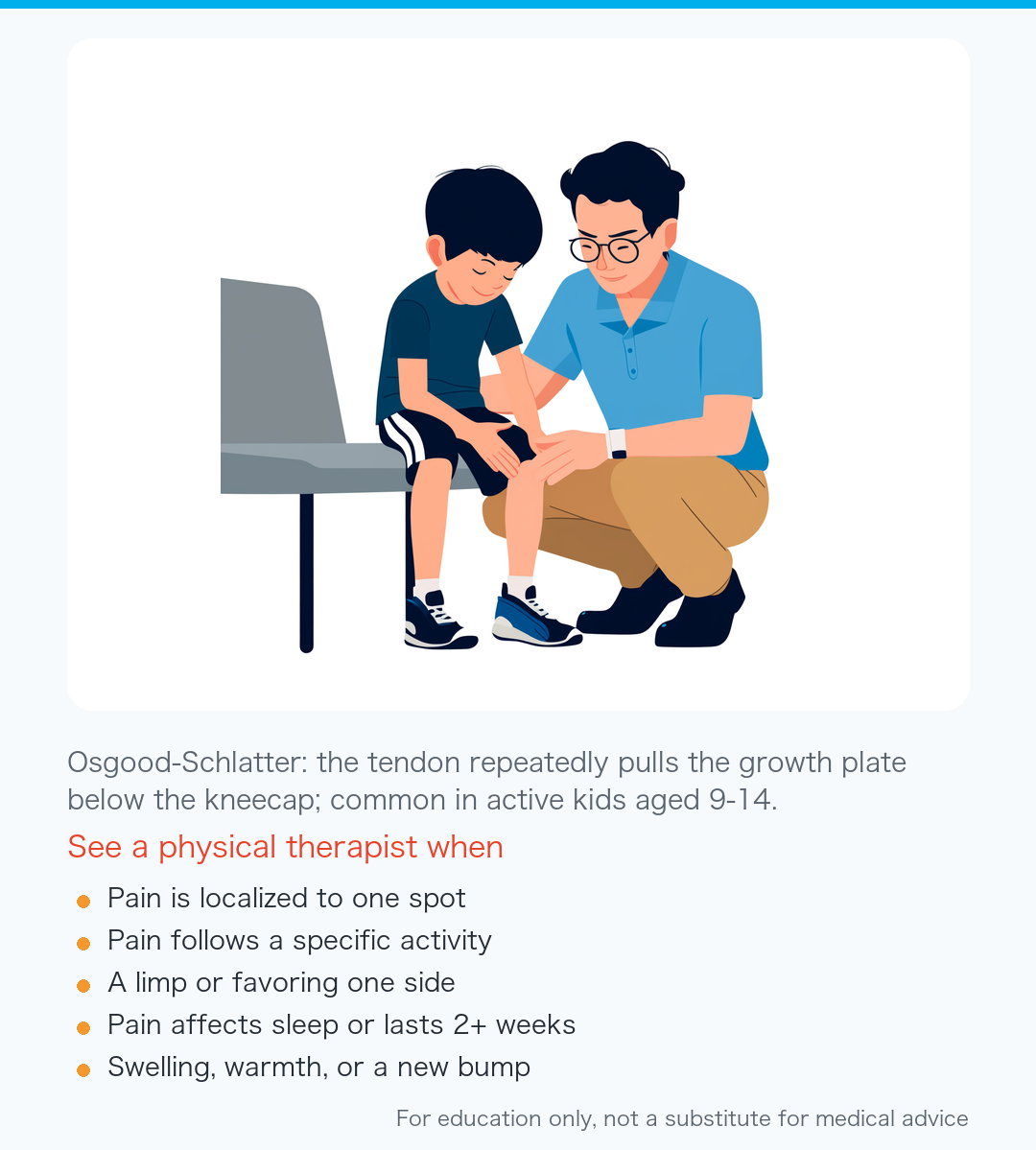
It can be easy to pass off complaints of pain as growth spurts, but sometimes it’s worth taking a closer look. According to research Osgood-schlatter disease is a common cause of knee pain in active children and teenagers.
Osgood-Schlatter is irritation of the growth plate just below the kneecap, caused by the tendon repeatedly pulling on that spot during running, jumping, or climbing stairs. It typically shows up in active kids between 9 and 14 during a growth spurt, and usually resolves on its own once bones stop growing in the early teenage years.
When to see a physical therapist:
• The pain is localized to one specific spot rather than vague and achy.
• Pain consistently shows up during or after a specific activity, like running or jumping.
• Your child develops a limp or visibly favors one side.
• Pain is affecting sleep or sticking around for more than a couple of weeks.
• There’s noticeable swelling, warmth, or a bump that wasn’t there before.
3. Teachers need to take care of themselves too!
Teachers have one of the more physically demanding jobs, but may not seek treatment right away. Neck, shoulder and low back pain are common pain points for the teaching population, especially from those who spend the full day in the classroom with hours on the feet, a “head-down” posture for grading and reading, and repeated bending, kneeling, or stooping to reach student desks or materials at low shelves. Female teachers, teachers with longer tenure, and those working with students who need more hands-on support tend to report higher rates of pain.
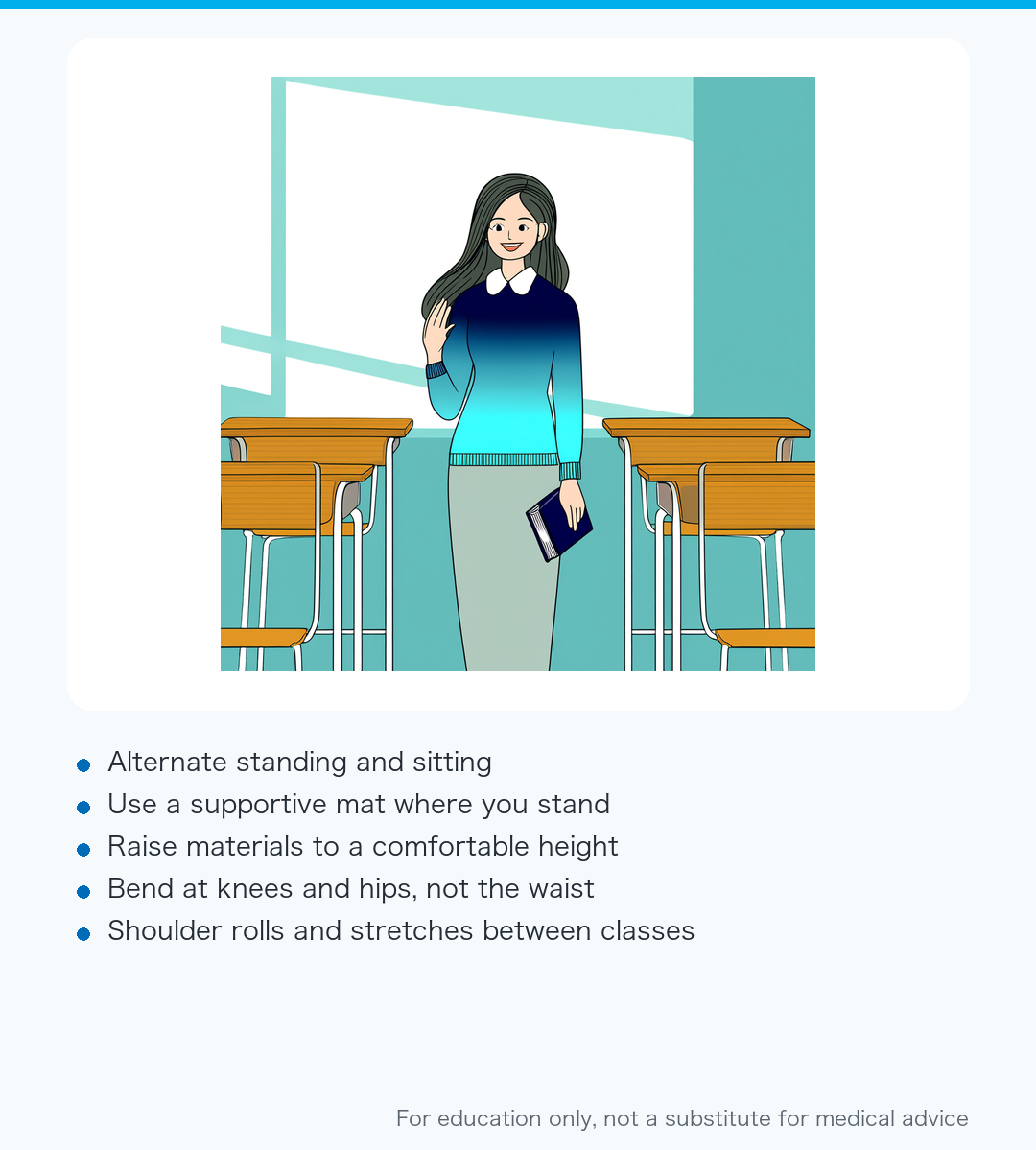
A few adjustments can help:
• Alternate standing and sitting through the day rather than staying on your feet for hours straight.
• Use a supportive mat near your desk or whiteboard if you’re standing in one spot often.
• Raise materials to a comfortable height for grading and reading instead of hunching over a desk.
• Bend at the knees and hips, not just the waist, when helping younger students or reaching low shelves and supply bins.
• Take a lap around the room during independent work time instead of standing still, and build in a few shoulder rolls or stretches between classes.
How Physical Therapy Can Help!
Listed above are just a few common pain points that students and teachers faces when returning back to school. Physical therapy can help teachers and students adjust into their routines smoothly, as well as offer supportive guidance throughout the school year when different issues come up.
For kids, physical therapy often addresses the “why” behind recurring pain, targeting discomfort such as muscle imbalances, movement patterns, or overuse from a specific sport. It also helps to confirm if a child can still continue to move in the same way and pursue the practices they enjoy.
For teachers, assessing how the specific physical demands of the classroom are affecting the body allows one to build a plan targeted to strengthening, stretching and practical workplace adjustments.
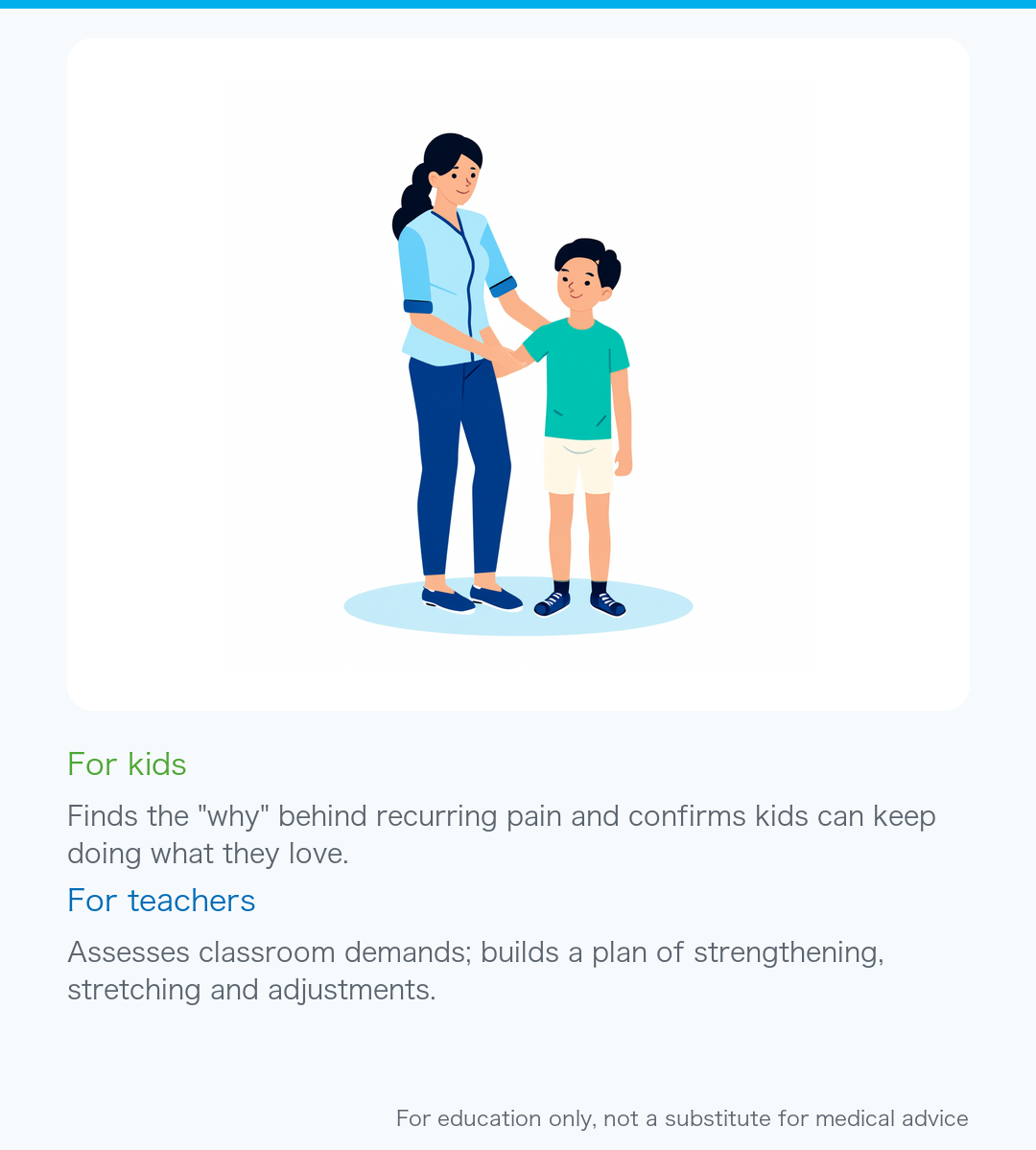
What’s it like seeing a physical therapist?
In all cases, our UP physical therapists will evaluate movement patterns and postures, pinpointing specific activities or habits that drive discomfort to create a plan that supports daily life. They will look at the ‘why’ behind the pain to help you or a loved one be able to move forward in a more comfortable manner. Not every ache should be labeled as ‘growing pains’ or ‘part of the job’ – having someone be able to support your daily routine might just be the simplest and best solution to creating a more enjoyable day-to-day experience. Schedule an appointment at UP to make this school year the best year yet!
本篇文章来源于微信公众号: 上海优复康复医学门诊部