
Why Physical Therapy Matters Both Before & After Surgery


Many of us think about physical therapy after surgery, but rarely do we consider it beforehand. But did you know that doing physical therapy before surgery, as well as after, can actually speed up your recovery process by preparing you to go into the surgery strong? Our international team of orthopedic doctors, physical therapists, chiropractors and TCM doctors looks for conservative, non-surgical solutions first. But when surgery is the right call, we stay with you the whole way, to set you up for the best success possible. Here’s how:
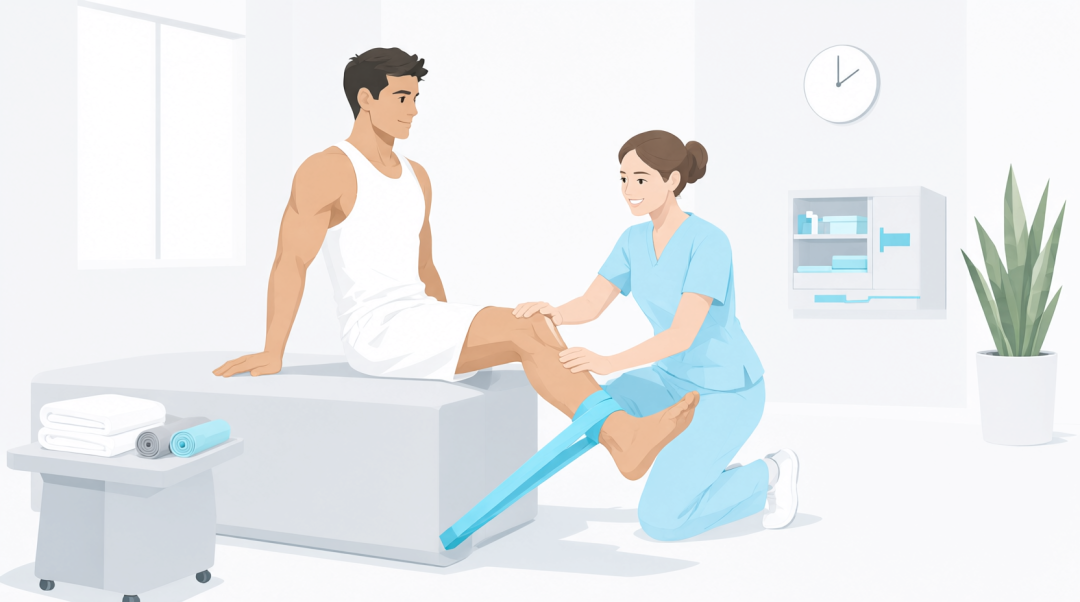
01 Prehab (Pre-Surgery) at UP Clinic
Pre-operative rehabilitation, or “prehab,” is one of our core services. We want you to go into the operating room with the best possible baseline. If you go in stronger, you come out stronger.
A prehab program with our physical therapists typically focuses on:
01 A full assessment first. We look for the root cause of the problem and how you move around it, not just the injured structure. Depending on what’s needed, we can also order imaging in-house so that you can avoid unnecessary examinations that only add cost.
02 Calming pain and swelling. If you are struggling with pain-management, we have many tools at our disposal to help reduce inflammation, such as ultrasound therapy or our GameReady compression. This can help settle an irritated joint so you can keep moving.
03 Strength around the joint. One of the biggest trade-offs with surgery is muscle-loss. But if we can, for example, build the quads before an ACL reconstruction, or the shoulder stabilizers before a rotator cuff repair, we can help limit the muscle loss that follows surgery.
04 Range of motion. If you have a knee or shoulder that is already stiff going into surgery, it’s going to be even harder to restore coming out. By increasing mobility beforehand, you’ll move better, and maybe even be in less pain, post-op.
05 Rehearsing recovery. This is a big one! We teach the exercises, movement precautions and walking aids you’ll use in the first days after surgery, so you start practicing them as soon as you’re ready to do so.
06 Setting expectations. We’re not going to sugarcoat reality. Working with a trained professional going into surgery will help to set a clear picture of each phase of recovery and what milestones to expect.
Probably the biggest benefit to prehab is to answer this question: Is surgery actually needed? Many of our patients with meniscus, ligament, disc or shoulder problems recover well with conservative care alone. If you do still need an operation, you have lost nothing and gained a head start.
02 PostOp (Post-Surgery) at UP Clinic
Recovery at UP follows a phased, evidence-based framework developed by our team. Post-surgery focuses on finding the root cause of the injury and rebuilding function in stages, rather than relying on long periods of rest. As Chief Physical Therapist Carl Qian explains in a recent interview [Chief Physical Therapist Carl on Working with Elites] weeks of immobilization can leave a joint stiff and the surrounding muscles weakened, so early, controlled movement is part of the plan. The longer you rest and avoid movement, the longer it’s going to take to get back to your baseline.
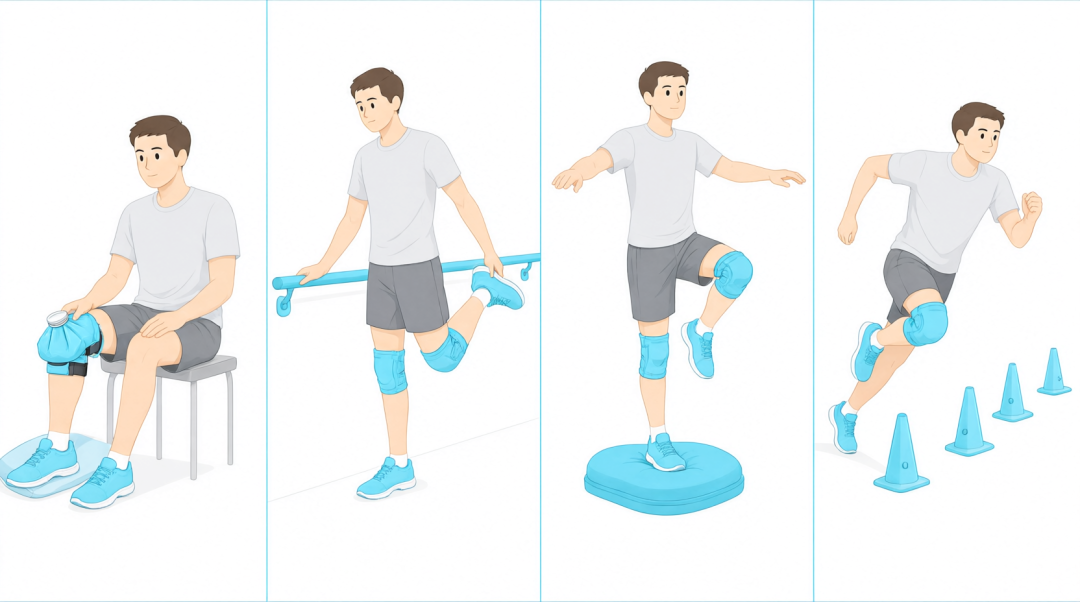
Every plan is built around your surgeon’s protocol, but a typical progression looks like this:
01 Protect and calm (roughly weeks 0–2). This is a period to manage pain and swelling. You’ll start with gentle, pain-free movement of the joints around the surgical site to keep circulation up and limit scar adhesion, while respecting weight-bearing limits.
02 Restore motion. As tissues stabilize, we move from passive joint mobilization to assisted and then active movement, rebuilding full range and fine control. Scar mobilization and manual therapy keep tissue moving well.
03 Rebuild strength and load. Once healing is confirmed, often with imaging, we add progressive resistance, balance and proprioception work. Isometric training preserves muscle when full load isn’t yet safe.
04 Return to activity. For athletes this means sport-specific drills: cutting, landing, jumping and running mechanics. You return only when objective tests are met, such as symmetrical strength between limbs, full pain-free movement, and normal balance.
While easy to skip, the last point is important! The most common setback we see is when patients return to full activity as soon as the pain fades, without allowing tissue to regain full strength. Objective testing replaces guesswork, and home exercise programs keep progress going between visits.
03 Why choose UP?
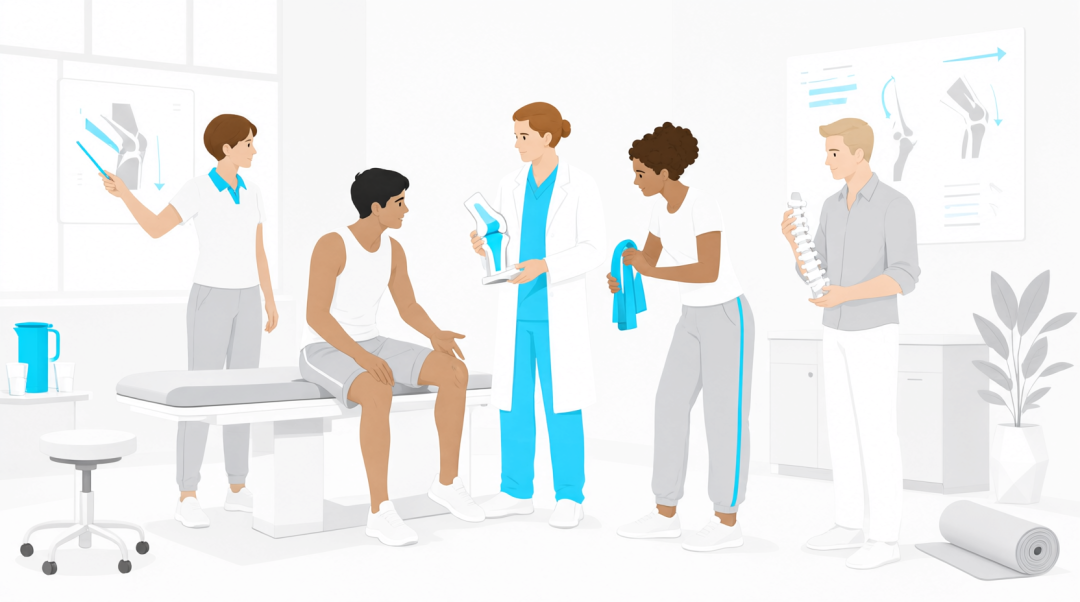
One advantage of recovering at UP Clinic is that everything sits under one roof: orthopedics, physiotherapy and sports medicine, plus chiropractic, osteopathy and TCM. Our orthopedic surgeons and physical therapists can consult on the same case, so your rehab plan and your medical picture stay in step.
Our team regularly guides patients before and after:
01 Knee: ACL, MCL and other ligament reconstructions; meniscus repair; cartilage procedures
02 Shoulder: rotator cuff repair, shoulder instability and dislocation surgery
03 Foot and ankle: Achilles tendon repair, ankle fractures, chronic instability
04 Fractures and dislocations: including upper-limb fractures such as the humerus, wrist and hand
05 Spine: recovery after cervical or lumbar procedures, alongside conservative care for disc problems
06 Joint and degenerative conditions: rehab around arthritis-related surgery
We have worked with everyone from professional athletes to weekend runners to the occasional sports enthusiast. Planning around your schedule and lifestyle is part of how we work to support you and get you back to doing the activities that you enjoy.
04 Plan your appointment early
If surgery is on your calendar, or you’re wondering whether you need it at all, the best time to see a physical therapist is now. Book your appointment today to get the most direct support, care and guidance to set you up for success.